Inviting unpredictability

Have a little faith. There is no black and white situation. Things always change. There is no inevitability in how an event unfolds – even if I think (or wish) there must be.

How often have I experienced that things turned out much better than expected, but before they did I was fretting about them a lot and at length. 

Of course, it is always good to be prepared and to think things through, considering options and alternatives. Nothing wrong with doing my due diligence. But often, even that turned out to be not necessary at all.

So I am trying to have more patience and trust, ultimately having confidence that things can sometimes turn out well. Adjusting my expectations and not always assuming a negative outcome by default has become an important practice for me. Sometimes it works, sometimes it doesn’t.

There is also a flip side of course. Life is unpredictable. 

We don’t have a lot under control, but we are deluding ourselves that we do. I am very familiar with this behaviour, because I am a planner. Fear of bad events (real or imagined) is driving my need for control. 

Well, life doesn’t work like that. I am so used to attempting to eliminate bad surprises and trying to get on top of all important tasks in my life – but I know my wish is a mere illusion. 

It’s much more liberating to let go of this idea – an idea essentially rooted in perfectionism. Herein lies the real inevitability: that I am unable to control the outcome of life events.


Become comfortable with not knowing.

Eckhart Tolle

Allowing myself to experience conflicting emotions is part of the package. Questioning from time to time if I am on the right path is fully ok – I just need to hang in there. 

Letting go of things I cannot control, again and again, is important, but it’s also a real struggle. 

That’s what I learnt during the past months. Unfortunately, my parents are not happy in the care home they are living in. Of course, it was a big change at a very late point in their lives and they are understandably upset. They are grieving what they lost, lacking the strength and willpower to adjust to their new situation. Their cognitive decline makes it harder.

The aggression and resistance my brother and I were confronted with really hurt though. It’s sad to see them making themselves so unhappy. It was the right decision to move them and we waited a long time before going through with it. It’s a relief to know that they are not alone anymore and have all the help and support they need. 

We had the best intentions but of course no control over the outcome. And that’s exactly what can happen: you do something for all the right reasons, but someone else is unhappy as a result. 

I had hoped for them to make the best out of this situation and focus on the benefits it clearly has for them, but they don’t want to see it.


The moment you accept what troubles you’ve been given, the door will open.

Rumi

To acknowledge all this, my role in it and how it made me feel, was difficult. I struggled a lot with these conflicting emotions, feeling lost, angry and sad. 

In the weeks that followed I took the time to process it all, focused on protecting myself and on letting go, bit by bit. With time, I felt lighter, easing back into balance.

Where people’s emotions are involved, things get messy. Personal sensitivities have a large influence on their decisions and override the facts of reality quite often. It’s never to be underestimated. It can be a source of hope but can also turn out to be a recipe for disaster. We just never know in advance – and that’s life.

Nevertheless, this is the tiny space where hope is living. Between the black and the white.

There is always potential in every situation, even if I cannot see it in the very moment I am in it. It can turn out either way and there is not a lot we can do about it besides inviting unpredictability into our lives, fully knowing that it’s not going to be easy. 

Ultimately, have trust in what will unfold. It’s not in our hands (not always or not fully anyway most of the time), but that does not have to be a bad thing.

Have trust. In yourself and in life.


Don’t be pushed around by the fears in your mind. Be led by the dreams in your heart.

Roy T. Bennett

How do you talk to yourself?

Many of us tend to engaging in negative self-talk. It happens often unconsciously, we are so used to doing it without questioning it.

Watching my favorite show, The Great British Bake Off, I noticed this behaviour among the candidates as well, many times, men and women alike. Putting themselves down, being overly self-critical or calling themselves “stupid” when making a mistake.

I did that myself many years of my life, thinking that I needed that sort of criticism because I messed up so often. Well, let’s face it: messing up is part of being human. It’s totally normal to make mistakes, but in my mind it was not because I expected perfection from myself. 

Since then I have learnt a lot and moved on. What I focus on now is doing things in a slow manner for starters and not judging myself when I make a mistake, whatever it is. Beating myself up is not going to change what has happened anyway. But it releases stress hormones in my body, damaging my wellbeing in the long run. It’s not worth it.

This reflex is hard to stop though. Human beings are innately judgemental, towards themselves and others. It’s so easy to point out the obvious: what went wrong and then to punish ourselves or somebody else for that mishap with words. Children pick it up from their parents, and might still experience at school that mistakes are followed by ridicule and punishment.

Doing things slowly and focusing on what I do, one thing at a time, is a good way of preventing mishaps in the first place. Whether it is at work, while cooking a meal or communicating with others. It requires intention, concentration and being present. No multi-tasking.

When I am not present but being somewhere else in my head, that’s when mistakes are bound to happen. That’s why rushing in stressful situations is never a good idea. 

Ambulance workers for example don’t rush when they arrive on the scene of an accident. They are very intentional in their movements and that requires a lot of training and self-awareness. This approach certainly serves the people needing their help best.

But once I (inevitably) mess up I try to stay calm and breathe, and then continue on with whatever I was doing. No blaming, no complaining, just taking a few breaths and then calmly continuing. No need to wreck my day by making myself feel inadequate.

That I managed to get this far is a huge achievement already. In the past I used to call myself an idiot. I have moved beyond that since.

I am human thus I am not perfect and I don’t have to be. And that’s what I am telling myself.

The temptation to get angry in that kind of situation is of course always there. Any deviation from my self-expectations can trigger me easily. 

A big recurring challenge for me is when my day does not go according to what I planned. Hardly any day unfolds according to plan, in fact. This is just my normal reality and I decided that getting angry with myself over it is not helpful. This has now become my practice of accepting a degree of uncertainty in my life and going with the flow. 

No chiding myself. No judgement. Be open. Just breathe and let go.

I repeat these words quite often in my head.

Good point in fact: don’t forget to breathe. In stressful situations I tend to hold my breath, therefore I give it extra attention.

That’s step number 1: quitting negative self-talk and allowing myself to make mistakes.

Moving on to positive self-talk is step number 2: acknowledging and encouraging myself. You did good. You’ll be fine. It’s ok to feel that way. 

It takes a while to internalize it, but things do get better. It takes awareness and constant practice. As always, I really need to make an active choice to change my behaviour and aim to responding instead of reacting.

Accepting life as it is. Accepting what is (Byron Katie). Accepting the inevitable.

It sounds easy but is so hard. It’s a very big deal, in fact. It makes you humble, realizing just how fallible we humans are and that nothing in life is a given.

We do not need to know or understand or be able to fix everything, or to slide through life perfectly well. These were once my beliefs I setup as a child. I let them go since and found more peace. They are still surfacing sometimes but they don’t control me anymore.

Riding the waves of life, navigating the everyday currents is essentially like bouncing up and down. This practice takes courage, acceptance and humility. 

The only thing we can do is trying, every day again, to do better tomorrow and to treat ourselves better. 

And acknowledge our small victories every time we succeed. 

Holding space for life’s contradictions

Have you lately been thinking that our world is not a good place right now, that there is more bad than good news and things are getting worse each day? 

The focus on social media is clearly and increasingly on the negative, outliers are pictured as standard. Hence our perception that the world is a bad place, inducing fear and anxiety. We think there is rarely positive news, but in fact there is – we just need to actively start looking for it.

A good place to go to is Fix the news. Here you find what is actually going right in the world: stories of real progress that we rarely hear about because mainstream media are just not interested in them.

Some examples:

The list goes on – from improving access to electricity and water in third world countries, to decreasing litter in the oceans, boosting renewables, cutting pollution in cities or setting up new nature reserves. Behind all of this are always people who have not given up yet.

…progress happens not through some invisible hand of history, but through the visible hands of people who refuse to give up on it.

Angus Hervey

At all times, on this planet, there has been collapse on the one hand and progress on the other. Night and day, yin and yang. They co-exist and are interdependent. Like the Buddhists say: without the mud there is no lotus.

But because the side of collapse appears to be increasingly over-amplified through the media, do we overlook these opposites co-existing, and instead tend to believe the world is doomed. It’s easy to fall into this trap. 

Our forefathers’ legacy, to always be prepared for disaster, makes negative and scary things stick even more intensely in our brain. But we can take a different viewpoint.

The world is always horrible and beautiful at the same time, it always has been. But how we look at this paradox is up to us. We decide what we focus on, and that impacts how we live, work, communicate or raise our children.

Everything has different and sometimes conflicting aspects – it depends on the viewpoint we take. 

Life’s complexity and ambiguity are of course difficult to take in. Holding space for two conflicting positions asks a lot of endurance and self-reflection.

Deep inside we know that, but black and white scenarios are much easier to grasp. That’s why we are striving for simplification, but life is far more complex.  


We live in hope—that life will get better, and more importantly that it will go on, and that love will survive even though we will not.

John Green

How does it sound to choose the bright side more often for a change, by giving preference to hope over anxiety?

Even if I am struggling in my life, I can nevertheless enjoy happy moments. It never has to be either one or the other – I can hold and unite opposites within me.

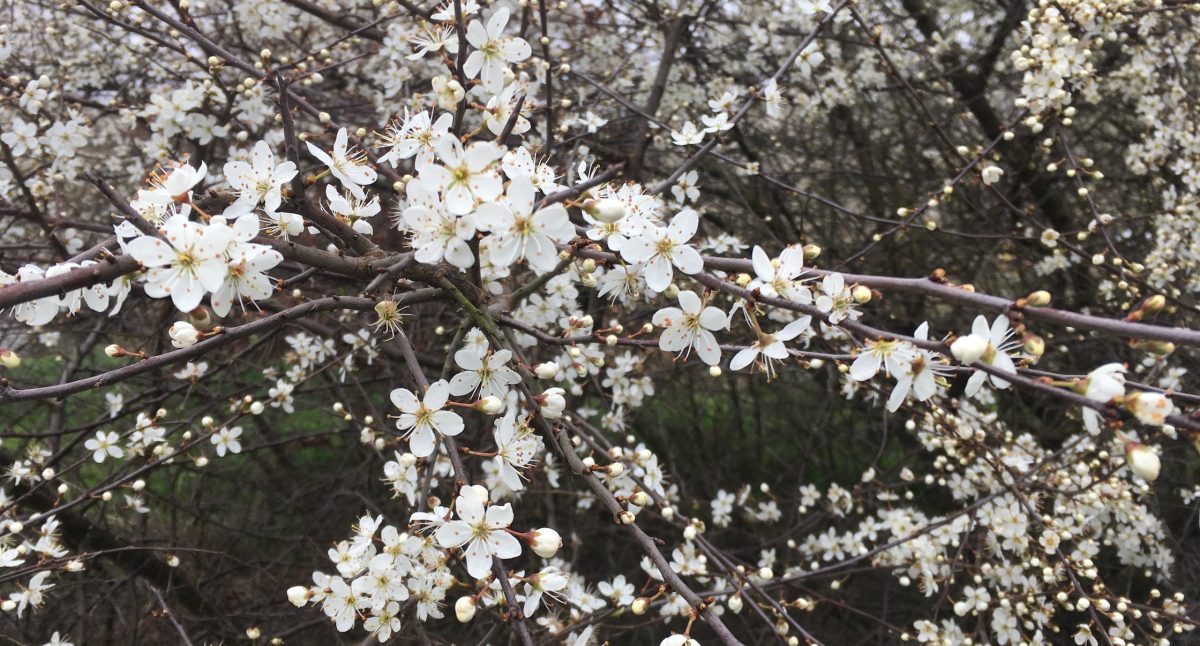
When I am not feeling well, I can still enjoy the sight of a blooming tree at the roadside.

I can feel desperate about climate change progressing, but still be happy about the achievements of The Ocean Cleanup.

Which side do we want to be on? Which story do we choose to be part of? Angus Hervey asks these questions in his inspiring TED talk.

Do we want to give in to despair or do we choose to be hopeful?

This choice people always had to make, in all circumstances at all times, and it’s never an easy one. 

How does it influence our thoughts and actions? How does it make us feel? Which choice do you think better equips us to deal with our daily struggles?

We set things in motion through our choices. What do we share with others, what deserves our time and energy, what do we believe in?

We change our lives by deciding which story we give preference to.

Ultimately, we change the world that way. Everything we do has repercussions, influences others. And it is sometimes so easy to inspire another human being, through the stories we share with them.

Holding space for life’s inevitable contradictions requires acceptance of life, the willingness to differentiate and living with nuances. 

Whenever I worry about the future, I remind myself that somewhere on this world – unknown to me – something always goes right.