Holding space for life’s contradictions

Have you lately been thinking that our world is not a good place right now, that there is more bad than good news and things are getting worse each day? 

The focus on social media is clearly and increasingly on the negative, outliers are pictured as standard. Hence our perception that the world is a bad place, inducing fear and anxiety. We think there is rarely positive news, but in fact there is – we just need to actively start looking for it.

A good place to go to is Fix the news. Here you find what is actually going right in the world: stories of real progress that we rarely hear about because mainstream media are just not interested in them.

Some examples:

The list goes on – from improving access to electricity and water in third world countries, to decreasing litter in the oceans, boosting renewables, cutting pollution in cities or setting up new nature reserves. Behind all of this are always people who have not given up yet.

…progress happens not through some invisible hand of history, but through the visible hands of people who refuse to give up on it.

Angus Hervey

At all times, on this planet, there has been collapse on the one hand and progress on the other. Night and day, yin and yang. They co-exist and are interdependent. Like the Buddhists say: without the mud there is no lotus.

But because the side of collapse appears to be increasingly over-amplified through the media, do we overlook these opposites co-existing, and instead tend to believe the world is doomed. It’s easy to fall into this trap. 

Our forefathers’ legacy, to always be prepared for disaster, makes negative and scary things stick even more intensely in our brain. But we can take a different viewpoint.

The world is always horrible and beautiful at the same time, it always has been. But how we look at this paradox is up to us. We decide what we focus on, and that impacts how we live, work, communicate or raise our children.

Everything has different and sometimes conflicting aspects – it depends on the viewpoint we take. 

Life’s complexity and ambiguity are of course difficult to take in. Holding space for two conflicting positions asks a lot of endurance and self-reflection.

Deep inside we know that, but black and white scenarios are much easier to grasp. That’s why we are striving for simplification, but life is far more complex.  


We live in hope—that life will get better, and more importantly that it will go on, and that love will survive even though we will not.

John Green

How does it sound to choose the bright side more often for a change, by giving preference to hope over anxiety?

Even if I am struggling in my life, I can nevertheless enjoy happy moments. It never has to be either one or the other – I can hold and unite opposites within me.

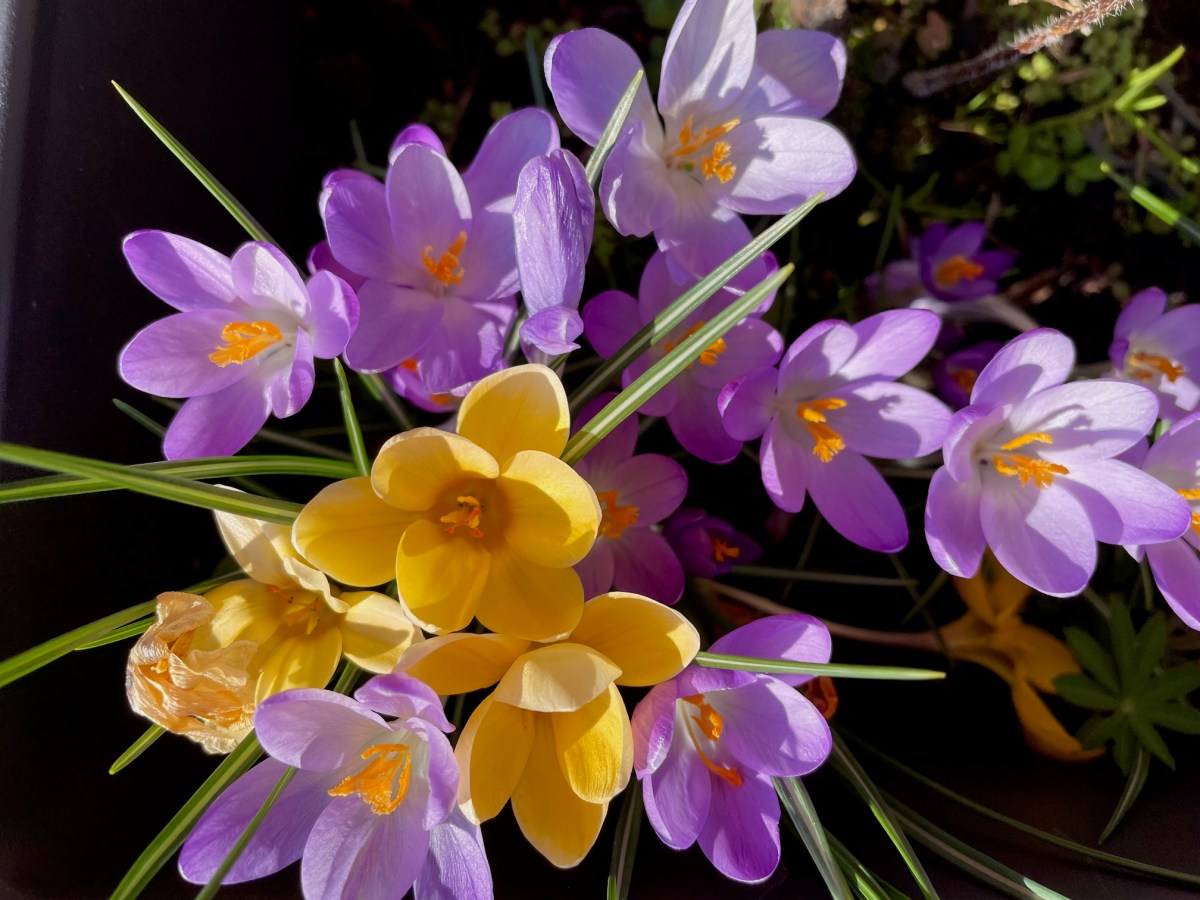
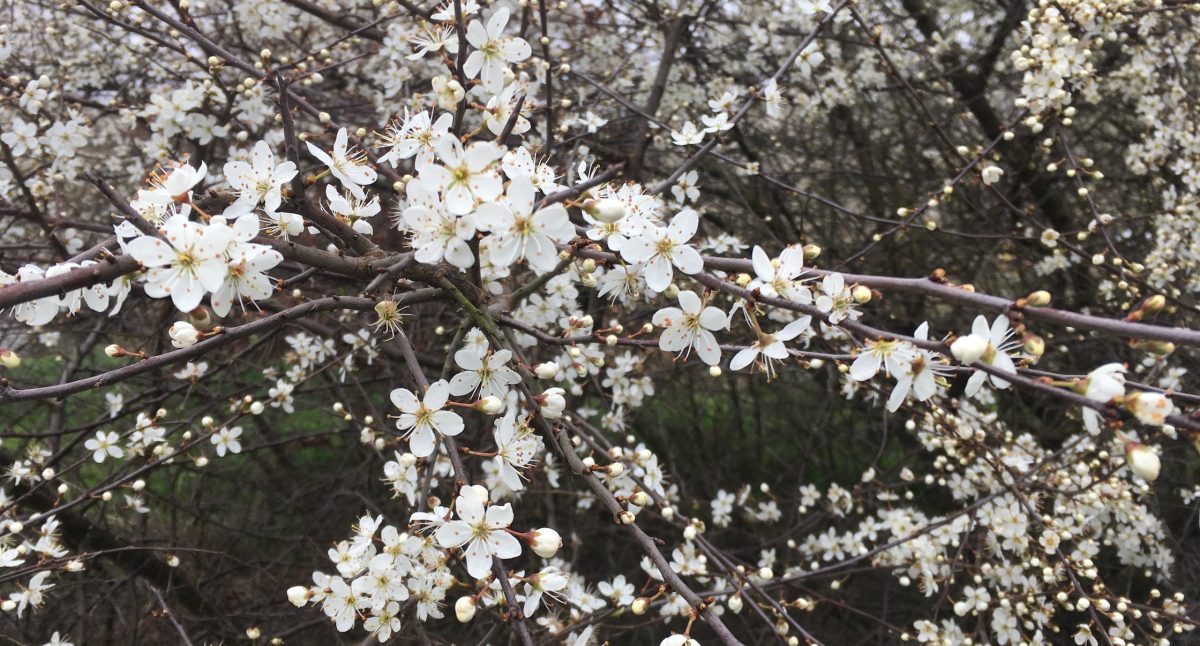
When I am not feeling well, I can still enjoy the sight of a blooming tree at the roadside.

I can feel desperate about climate change progressing, but still be happy about the achievements of The Ocean Cleanup.

Which side do we want to be on? Which story do we choose to be part of? Angus Hervey asks these questions in his inspiring TED talk.

Do we want to give in to despair or do we choose to be hopeful?

This choice people always had to make, in all circumstances at all times, and it’s never an easy one. 

How does it influence our thoughts and actions? How does it make us feel? Which choice do you think better equips us to deal with our daily struggles?

We set things in motion through our choices. What do we share with others, what deserves our time and energy, what do we believe in?

We change our lives by deciding which story we give preference to.

Ultimately, we change the world that way. Everything we do has repercussions, influences others. And it is sometimes so easy to inspire another human being, through the stories we share with them.

Holding space for life’s inevitable contradictions requires acceptance of life, the willingness to differentiate and living with nuances. 

Whenever I worry about the future, I remind myself that somewhere on this world – unknown to me – something always goes right. 


Life’s impermanence

Preparing the move of my parents to a care home during the past months brought up sad feelings for me, very suddenly. The time has come to say farewell to their apartment they have been living in for 12 years and to the life they were used to.

It’s a journey coming to an end, and it’s also a first farewell we children have to say, before the final chapter approaches.

It is sad. Sifting through all their belongings, deciding what they will take with them, what my brother and I will take with us, and what will be given to charity is after all, a hard step. 

Right now it takes place only in my mind: trying to remember what’s hidden in their cupboards and drawers, and where I need to watch out for possible surprises once I will be on site in a few weeks’ time and actually doing it. 

As usual I want to preempt getting stuck in the process by something that I have not thought about up front, because I want all to go well. It is a tight schedule for both my brother and I – him living in a different city than my parents and me living in a different country.

All their possessions – many of which are very dear to them – tell a lot about their life together, about their hopes, aspirations, love and struggles. It’s what remains of a life.

It is not just about the complex organization of their move, it has a very emotional component.

I want to give them the chance to be happy in that new place, but I am also aware that it will be quite a shock for them. The loss of control and full dependency on others is the reason why a lot of people who move to a care home facility die within the first 2 months.

Many objects they were used to and saw daily will no longer be around them. That goes for crockery and cutlery, their wineglasses, their bedlinen, their towels. They will be dependent upon others to wash their laundry, clean their space, give them food, or even a spoon for a tea bag. They will not brew their own coffee anymore in the morning.

On the other hand, of course, a weight is taken off their shoulders. They have not been able to cope anymore with daily life for a long time and struggled a lot. But there is a downside to everything and I know it will not be easy for them to adjust.

I want them to be happy, but all I can do is trying to soften their landing in that new reality. By being mindful and attentive, and making sure they can feel comfortable and have sufficient objects around them which serve as a reminder of past times. Like books, plants, photos, paintings, placemats or decoration. It’s often the small and simple things that bring joy.

I also need to acknowledge their feelings and deal with difficult situations that might arise, especially with my mom. My dad is easier to handle: he is pragmatic and accepts his dwindling capabilities – physically and mentally. But my mom is fighting reality as always, so for her it will be hard. Deep down she knows it is the best solution and she even said so in her more clearer moments, however, even her dementia will not let her ignore the obvious: that it is a big change.

Personally, I need to deal with these aspects as well: the factual side which means intensely project managing a lot of stuff, but also handling the emotional impact it has on me. It is hard. And I have no guarantees that my parents will be happy. I can only strive to enable it as much as possible.

Have a little faith
You’ll see it’s alright
Take a little time to breathe
The tide turns eventually
It comes in, it goes out
If you’re ever in doubt
Just have a little faith.

(Have a little faith - Son Mieux)

Going through this process turned out to be a reminder of the nature of impermanence. It reminds me of my own mortality, and that we cannot take any worldly belongings with us when it’s time to go.

My parents will lose a place they loved, but I realized that I will lose that place, too. The sadness I felt surprised me a bit at first because I have no strong connection to that place, but this feeling arising showed me what lies underneath and what I need to acknowledge for my own life.

And it made me question all the stuff that I have accumulated in my own apartment, and whether it is about time to gradually let go of more of it, bit by bit. Doing it feels liberating.

We come empty-handed into this world, and that’s how we will leave it. All of us. It’s important to have no illusions about it.

This is what the 5 remembrances mean in Buddhism:

We are all of the nature to grow old, to get sick and to die. There is no escaping that.

We will lose the people and the places that we love.

The only things we can take with us are our actions.

(Plum village podcast episode 82)

Even though these words might feel like a threat hanging in the air, it actually helps to focus on the present moment which needs our full and undivided attention. In the present we need to fully show up. Whatever we do, whoever we are with. 

Enjoy and appreciate what is in front of me and be grateful for it. The present moment turns into the past in the blink of an eye.

Everything in life is subject to change. That is just reality. That change is not meant to haunt or to taunt us. Its purpose is to teach us every day to be grateful and focus on what is really important in life.

Whatever I am currently working on, all the plans I make – which importance will it have in 50 years from now? Impermanence puts things into perspective when my head starts spinning.

Resorting to meditation whenever I felt overwhelmed by the complexity of the current situation, helped me. That’s why I keep on doing it as often as I can, striving for a daily routine. Like this morning when I got up with my head full of racing thoughts, then decided to stop myself in my tracks by sitting still and focusing on my breathing for 15 minutes. It brought me calm and I felt better equipped to start my day.

Of course, all my planning is a mere attempt to gain as much control as possible over the future. 

It does not mean everything is actually going to work out as I want to. But my worries might also not come true. 

The thoughts I started repeating to myself: it will work out eventually. There is no reason why all things should go wrong. And when issues come up then I will manage them. It’s not the end of the world. 


How to navigate these times of uncertainty

“We must not lose faith”, my colleague Elena recently said to me. How true. I have been thinking about it ever since. More than one month now into the madness of this terrible war in Ukraine, unfolding while we are watching, often in real time through social media, how people lose their homes and their lives, cities being reduced to ashes. One month that has shattered quite a few firm-held beliefs, exposed illusions and left us severely concerned for the future.

But it also brought so many of us closer together, standing firm in our resolve to do the right thing and not let evil win. Hanging in midair between desperate hope and deepest sorrow. If only the power of our thoughts could make it all end – and yet it doesn’t.

I am certainly not the only one feeling this way, that’s why we see so much determination among people, so many outstretched hands and support. People go out of their way to help.

We have to hold on. No matter how nerve-wrecking it may be, how easy it might seem to slip into despair. We got to have faith and hold on even more. We owe it to those experiencing unfathomable suffering. We need to be strong – for their sake.

Yes, our influence on what happens is very limited. But I feel that we nevertheless must conjure the power of good, relentlessly. To create a counterbalance that will turn the ship around one day. 

“I can’t say I have confidence in the future, but I have a lot of confidence in its unpredictability, based on the fact that the past has regularly delivered surprises…. We need to have confidence that surprise and uncertainty are unshakable principles, if we want to have confidence in something. And recognize that in that uncertainty is room to act, to try to shape a future that will be determined by what we do in the present.” (Rebecca Solnit)

In the space of the past weeks we had our share of surprises already. And so had our governments, realizing that their citizens are far more decent and reasonable in the face of adversity than they had previously assumed. Yes, people take responsibility, in many different ways, often unusual and surprising.

Proving again that most people are indeed pretty decent. The worse the situation gets the more we must be at our best. And that is the only thing we can do. Good and evil usually lie very close to one other in daily life. Sometimes, they are even two sides of the same coin. What does matter is on which side we decide to focus on.

It’s good to remind ourselves that nothing is perfect in any way: not people, nor their behaviour nor any decisions taken. It can always only be as good as it gets. We need to bear that in mind, as there never is a perfect solution. But focusing on the good does make a real difference, and effecting change inevitably requires making adjustments while moving along. We’ll get there.

Hope is being able to see that there is light despite all of the darkness. (Desmond Tutu)

Only in the darkness can you see the stars. (Martin Luther King)

At first, I was watching the news daily, almost continuously, longing from day to day for the war to finally stop, hoping not more lives to get lost, not more destruction to happen. As if turning away somehow meant abandoning these people in my thoughts.

Imagine having to flee your country because your life is threatened, but knowing full well the place you called home could be erased from the map forever. What a profound sadness this evokes. I understand how people can get uprooted by such a traumatic experience of losing everything they hold dear.

However, we are doomed to watch from the sidelines. Failing to push events to the back of my mind, I struggled to focus on my own life which did me no good. Once these images entered into my dreams at night I just couldn’t go on like this. That’s when I drastically reduced my news intake. 

What also really helped to calm me down was taking care of a little lamb in my friends’ flock of sheep. It is the second time in the last years that I am helping to raise a lamb, and spending time with these peaceful animals in the stable every evening, knowing they trust me, is so good for the heart and soul. 

My hope is on the things we don’t see, things going on behind the scenes, hidden from our view. The people who covertly connect, negotiate and work on solutions. I put my hopes on them. Not all is lost. Help is coming from unexpected sides as well, and maybe we will never even know about all of it.

We Europeans are painfully aware of how much more is at stake now. It’s also our freedom which is being defended in Ukraine. 

There is a saying in Tibetan, ‘Tragedy should be utilized as a source of strength.’ No matter what sort of difficulties, how painful experience is, if we lose our hope, that’s our real disaster. (Dalai Lama)

It is hard to bear looking evil in the face – and that’s what we are doing, listening to the pleas for help knowing full well we ordinary citizens cannot do more. While hoping for a miracle where to turn our thoughts? And what to focus on?

It does not help anyone to put our own lives on hold. We need to uphold ourselves and others in these times of uncertainty, sending signals of hope in the dark:

  • Getting involved helping the refugees of war in whatever manner we can. It might feel like a small contribution but it aids healing and gives a sense of purpose.
  • However horrible it is what we are witnessing: the world doesn’t stop turning and there are people who need us to be at our best: our children, friends or colleagues, or whoever is in need of a helping hand. 
  • Continuing to share our knowledge, particularly with the young, supporting them and making them stronger, is one of the best investments into the future.
  • Be creative. Creation is the opposite of destruction. It enlightens our hearts, and bears witness to the resilient human spirit.
  • Taking care of our mental health is essential. To witness a war unfolding up close is a nightmare, so cut yourself some slack, and take time to re-charge, particularly if involved as a volunteer in helping the refugees. And avoid consuming news in any form in the evening if you want to get a good nights’ sleep.
  • It is not wrong to cherish and appreciate the good we have. We need to enjoy what life offers us. Carpe diem.
  • Be more conscious of the beauty of ordinary things, grateful for their existence and the joy they give us in this very moment. They will keep us grounded. 

This is very much a reminder of our own mortality and how to use our time on earth well.

I will never apologize for embracing joy and beauty – even when the world is falling apart – because joy and beauty are my fuel for activism. (Karen Walrond)

The pointless and evil can never win. That I do believe.