Holding space for life’s contradictions

Have you lately been thinking that our world is not a good place right now, that there is more bad than good news and things are getting worse each day? 

The focus on social media is clearly and increasingly on the negative, outliers are pictured as standard. Hence our perception that the world is a bad place, inducing fear and anxiety. We think there is rarely positive news, but in fact there is – we just need to actively start looking for it.

A good place to go to is Fix the news. Here you find what is actually going right in the world: stories of real progress that we rarely hear about because mainstream media are just not interested in them.

Some examples:

The list goes on – from improving access to electricity and water in third world countries, to decreasing litter in the oceans, boosting renewables, cutting pollution in cities or setting up new nature reserves. Behind all of this are always people who have not given up yet.

…progress happens not through some invisible hand of history, but through the visible hands of people who refuse to give up on it.

Angus Hervey

At all times, on this planet, there has been collapse on the one hand and progress on the other. Night and day, yin and yang. They co-exist and are interdependent. Like the Buddhists say: without the mud there is no lotus.

But because the side of collapse appears to be increasingly over-amplified through the media, do we overlook these opposites co-existing, and instead tend to believe the world is doomed. It’s easy to fall into this trap. 

Our forefathers’ legacy, to always be prepared for disaster, makes negative and scary things stick even more intensely in our brain. But we can take a different viewpoint.

The world is always horrible and beautiful at the same time, it always has been. But how we look at this paradox is up to us. We decide what we focus on, and that impacts how we live, work, communicate or raise our children.

Everything has different and sometimes conflicting aspects – it depends on the viewpoint we take. 

Life’s complexity and ambiguity are of course difficult to take in. Holding space for two conflicting positions asks a lot of endurance and self-reflection.

Deep inside we know that, but black and white scenarios are much easier to grasp. That’s why we are striving for simplification, but life is far more complex.  


We live in hope—that life will get better, and more importantly that it will go on, and that love will survive even though we will not.

John Green

How does it sound to choose the bright side more often for a change, by giving preference to hope over anxiety?

Even if I am struggling in my life, I can nevertheless enjoy happy moments. It never has to be either one or the other – I can hold and unite opposites within me.

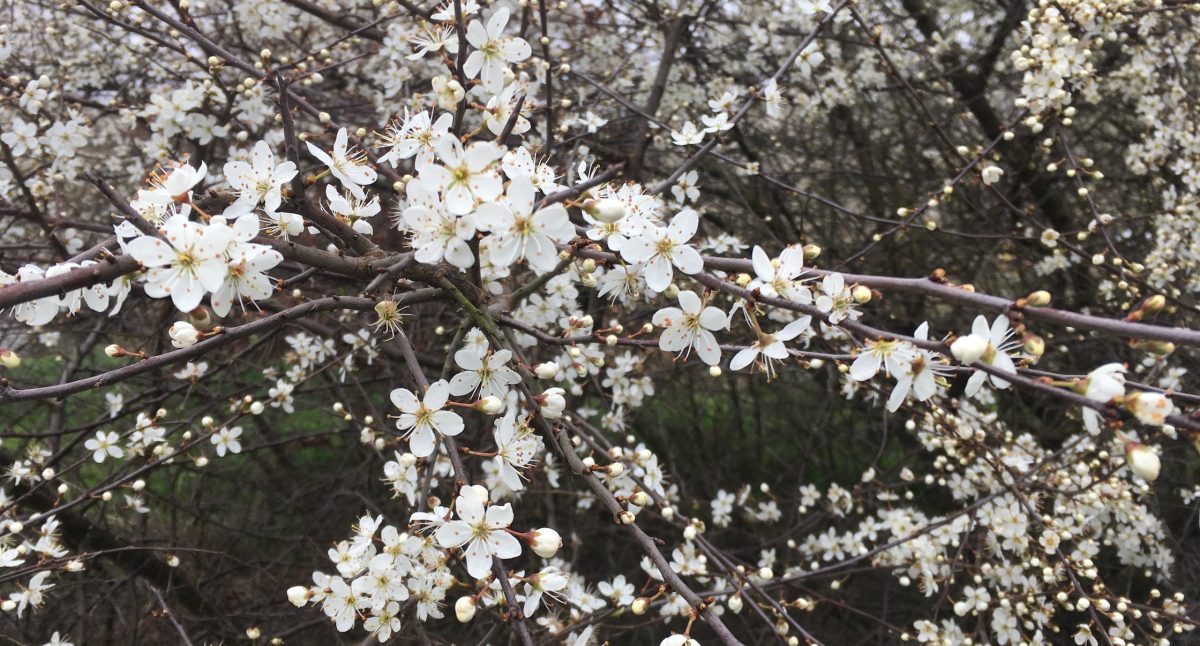
When I am not feeling well, I can still enjoy the sight of a blooming tree at the roadside.

I can feel desperate about climate change progressing, but still be happy about the achievements of The Ocean Cleanup.

Which side do we want to be on? Which story do we choose to be part of? Angus Hervey asks these questions in his inspiring TED talk.

Do we want to give in to despair or do we choose to be hopeful?

This choice people always had to make, in all circumstances at all times, and it’s never an easy one. 

How does it influence our thoughts and actions? How does it make us feel? Which choice do you think better equips us to deal with our daily struggles?

We set things in motion through our choices. What do we share with others, what deserves our time and energy, what do we believe in?

We change our lives by deciding which story we give preference to.

Ultimately, we change the world that way. Everything we do has repercussions, influences others. And it is sometimes so easy to inspire another human being, through the stories we share with them.

Holding space for life’s inevitable contradictions requires acceptance of life, the willingness to differentiate and living with nuances. 

Whenever I worry about the future, I remind myself that somewhere on this world – unknown to me – something always goes right. 


When things go wrong

The storm raging outside mirrors my inner turmoil, thoughts racing. Images and places long gone, historical events, words and news headlines spinning around in my head like colourful pieces of glass in a big kaleidoscope. 

How will the future unfold? Believing things will somehow turn out well is wishful thinking but I am clinging to hope. I know that it’s a fine line between normality and a potential sudden downturn into disaster. 

Knowing that the next years will bring a lot of suffering and bad things are bound to happen, is just a realistic assessment. 

It’s all a bit much right now: ongoing climate change, the presidential election results, wars continuing unabated.

On the other hand, nothing is ever set in stone and where there is darkness, there is also light. 

Even in the storm, the sun is shining behind the clouds. 

Rumi

So, hanging on to eternal wisdom and hope is one way of coping, and going on about my daily life. Well knowing that I will feel down and overwhelmed from time to time. 

Getting a bad conscience about keeping my healthy distance to the news, but being fully aware that I need to be serious about setting such boundaries to protect myself. The only control that I have is over my own thoughts and decisions.

Being very self-aware of how it all makes me feel, and listening to what my inner being is telling me that she needs. 

Looking at all the problems and crises in the world it’s easy to get overwhelmed, because we cannot solve everything. But we don’t need to. The thought that resonated with me in the latest episode of my favourite podcast
“Focus on one thing you can do well and trust that others do the same.”

Indeed, we are not alone and it always makes me happy to see other people’s thoughts, advice, engagement and commitment. Their ideas and activism. 

It is so important not to lose hope or become angry at all that goes wrong, at the existence of evil and the amount of suffering in the world. 

The massive threats we are facing, like the climate crisis, are scary. But if leaders are not listening, it does not mean that activism is ineffective. 

The spoken word has immense power, can move people and be the catalyst for change. 

What we mostly perceive through news and social media is the – quite amplified – negative side of the coin. But there is equally love and hope out there, inventions, advice and support. 

Progress made is never in vain, even if it sometimes goes like “1 step forward, 2 steps back”. It leaves a legacy with people. It sows a seed and can be brought back to life.

Change comes in small steps. It’s rarely the big revolution that brings about radical change. It’s a sequence of small steps that finally pave the way to a different reality, so don’t underestimate its power. It takes patience and perseverance.

Most of us might wish for change to come at lightning’s speed, me included. Looking at the big challenges we are facing feels like we are running out of time, thus breeds impatience that could easily lead to overwhelm and despair. 

But none of us has a magic wand. And it’s never one person alone who could fix things , especially not when things went the wrong way for a long time. We need to hold on to each other and collaborate. And we need to acknowledge our responsibility for our life choices.


To create fundamental change, we, the members of society, have to transform ourselves. If we want real peace, we have to demonstrate our love and understanding so that those responsible for making decisions can learn from us.


Thich Nhat Hanh (Love in Action)

To change the world we first need to change ourselves. 

And if we can change ourselves, then we can change the world. 

A comforting truth: it works both ways.

How can I become the best version of myself? Easier said than done. But with myself, I have agency. I decide what to do and how to respond. It is hard and exhausting sometimes. 

1) Acknowledge the importance of the worries and threats impacting all of us. We cannot run away from them, and I do understand the anger and frustration of activists who do not feel heard. 

2) Do not lose hope, don’t let it drag you down. Taking care of yourself, your sanity, is a must. Don’t lose faith in the goodness of people or our love for the beauty of the world. That is not naive but an important part of surviving, of quality of life. We need that. Without closing our eyes to reality and what has to be done. 

Don’t give in to despair. It’s a difficult act of balance, and I am not good at it either. And remember: self-care is not selfish, but the necessary foundation for showing up well.

3) Focus on what you can do within your power. No contribution is too unimportant, we need to keep reminding ourselves of that. It could take the shape of activism but there are more options. Sharing information, supporting a cause, can be as helpful. Being attentive to people’s needs, educating and enabling others. Helping things progress and looking for kindness.

4) Have trust in others. We are in this together. It feels reassuring not to be the only one who is trying to make a change and do the right thing.


How do you know that the side you are used to is better than the one to come?

Rumi

I refuse to let this situation have the power to control my sanity, my peace, my wellbeing or my happiness. 

We need to live our lives and live them well. We need to do whatever good we can within our own circle of influence, and we need to do it together. Because we are in this together.

That is the only way to effect change.

There will never be a time when all of humanity’s problems will be solved. We can never expect one person to come along and handle everything for us – as tempting as such a thought might seem.

It is always up to us.


…use your courage and creativity to build what you know is missing from the world.

Yung Pueblo

The balance between hope and despair

The concept of fairness is deeply ingrained in us. Like a red thread running through our lives, a structure that makes it easier to find our way – a Northern star guiding our decisions.

It determines how we treat others. For most of us, it is self-evident.

But sometimes we hit a wall. Something happens that suddenly throws us off balance. We lose a loved one. We lose our job. Accidents happen, disaster strikes, we get seriously ill… 

This can trigger a reflex making us ask: why me? What did I do to deserve it? Could I have prepared myself better, or somehow prevented it?

Interestingly, we think that we are somehow responsible, beating ourselves up for it, instead of acknowledging that this is just life – a random event happening which never follows the principle of fairness. 

To be a good person striving to do the right thing is unfortunately no guarantee to prevent bad things from happening to us. Fairness is rather an expectation we carry around: an expectation that life should be fair, if we just take the right decisions and behave in a just manner.

The frustrating realization that the world is actually not fair shows the deep disappointment we feel when someone else (or the universe for that matter) doesn’t keep their part of the (expected) bargain. 

We expect the world to be different. We even raise our children to act in a fair manner, to treat others well – like we want to be treated ourselves. And it’s in fact our children who remind us by shouting out “that’s not fair” that they indeed have a very good sense of how things ought to be.

It also triggers a deep fear when realizing that what we took for granted is suddenly caving in like a house of cards. We feel that we lose control falling into a bottomless pit. It is scary. It is threatening. That’s why the reflex in us is so strong to deny it: we are trying to run away from our suffering.

Hope is important because it can make the present moment less difficult to bear. If we believe that tomorrow will be better, we can bear a hardship today. (Thich Nhat Hanh)

It takes courage to embrace our suffering, to endure a difficult and painful situation and not give up. Especially when it is challenging our beliefs and our inner framework. It can happen anytime and to everyone, and we cannot prepare ourselves for it.

It helps to understand that bad events happening to us are a part of life.

But our inner values and principles which are guiding us, are another part of it. 

These two are not mutually exclusive but rather different companions on our life’s journey. We will encounter the whole spectrum of it all the time. And we cannot expect to have one without the other.

The best way to not feel hopeless is to get up and do something. Don’t wait for good things to happen to you. If you go out and make some good things happen, you will fill the world with hope, you will fill yourself with hope. (Barack Obama)

But what we can control is how we deal with what comes our way. The world becomes what we make of it, and that’s visible every day. 

Everything we convey through your actions or inaction, each word we say or don’t, each act of kindness or the opposite, changes the world. It makes a difference. So, let’s become more aware of how much influence we actually have. On others and on ourselves.

Does a bad thing happening to me make me question my approach in life? Does it make me lose my faith in myself and others? In humanity?

Would I throw my beliefs overboard?

I believe that hanging on to what is guiding me in life is even more important in such testing situations. There is a reason for why I have decided long ago to live my life based on certain principles.

What we can do:

  • Moving through it with patience and compassion for yourself is very important, in whatever sort of such situation you are. To have others supporting you is wonderful, but don’t forget to support yourself in the same way: speak kindly to yourself.
  • Ground yourself, calm yourself down, simply to avoid your nervous system going into overdrive. Meditation and breathing exercises can be a very powerful tool to help.
  • Cry when you feel like it. Once you stop you will notice that the earth has not opened up and swallowed you. You are still there. And then allow yourself time and space to heal. 

Nothing is as important as my peace, my joy. I smile to everything, even to my suffering, my difficulties. That is a practice of freedom. (Thich Nhat Hanh)

It is hard to lean into our pain, while staying confident and trusting ourselves at the same time. But it is important not to ignore the pain. Acknowledge it, but at the same time do not give up hope. Savour the precious moments of joy in your life.

We have every reason to trust that we can move through the hardships in life. Because there is constant change – in either way, hence also to the positive.

Trust yourself.

————————————————————

If you are interested in meditation and finding inner peace, I can recommend the Plum Village App.

The podcast “The Way Out Is In” offers profound, insightful conversations based on Thich Nhat Hanh’s teachings of Buddhist philosophy.