The right choice only exists in the present moment

A friend of mine who recently moved back to her home country after living and working a long time abroad in Kenia expressed her struggles to adapt, feeling torn between the two worlds and questioning whether she made the right decision.

Does this really exist: the right decision? It feels all too familiar to me: wanting to get it right, therefore spending time considering a lot of facts before making a decision. I did this often in my life. But nobody can get it perfectly right because everything is subject to change and we just aren’t clairvoyants. We don’t know how the future will unfold. 

And we could never possibly know all facts, all parametres anyway. In hindsight, we will know more, but in the very moment of decision-making we did not. 

But even with an abundance of facts and carefully weighing pros and cons, there is no guarantee that I get it right or will feel happy about it afterwards. It could work out either way.

That’s my experience with moving to other countries. Knowing a lot before making the move did not spare me inner conflict or struggles. Knowing less and following an impulse, a feeling can surprisingly work out very well on the other hand.

There is a reason why human decisions are very much based on feelings rather than facts. Where AI is binary – we most certainly are not. Only I can know if something feels right for me, but my feelings can also be quite complex and ambivalent. 

Allowing myself to rely on my intuition as an important part of what we humans call decision-making is essential, instead of pretending that it is just a fact-based process.


May your choices reflect your hopes, not your fears. 

(Nelson Mandela)

Moreover, decisions are always a choice, a reflection of my current circumstances and mindset. And all that inevitably evolves and changes.

It makes no sense to blame myself for a decision I made in the past. At that moment I was in a different place and in a different situation. I did not know what I know today. I was younger. My values, preferences, priorities were different, and so were my mood and my emotions. 

Things change. We change. Our perspective changes over time. Our level of maturity evolves, our health changes. 

And so we make the best decision we can under these circumstances at that point in time. That is enough.

Since I came to understand this, I don’t view it in the right/wrong context anymore. This isn’t black or white. 

The need I felt for a long time, to take the “right” decision was deeply rooted in perfectionism which developed during my childhood when I was not allowed to make mistakes. Recognizing it helped me change my perspective. 

The right choice – if I can call it that – is always a temporary thing: it only exists in the time and space we inhabit in the present moment.

Now when I make a choice I know it’s to either stay on the path I am on or take a turn somewhere at a crossroads which will spin me into a different direction. Every choice has consequences and only time will tell if I remain comfortable with them or whether I will feel the need one day to make an adjustment and take another turn.
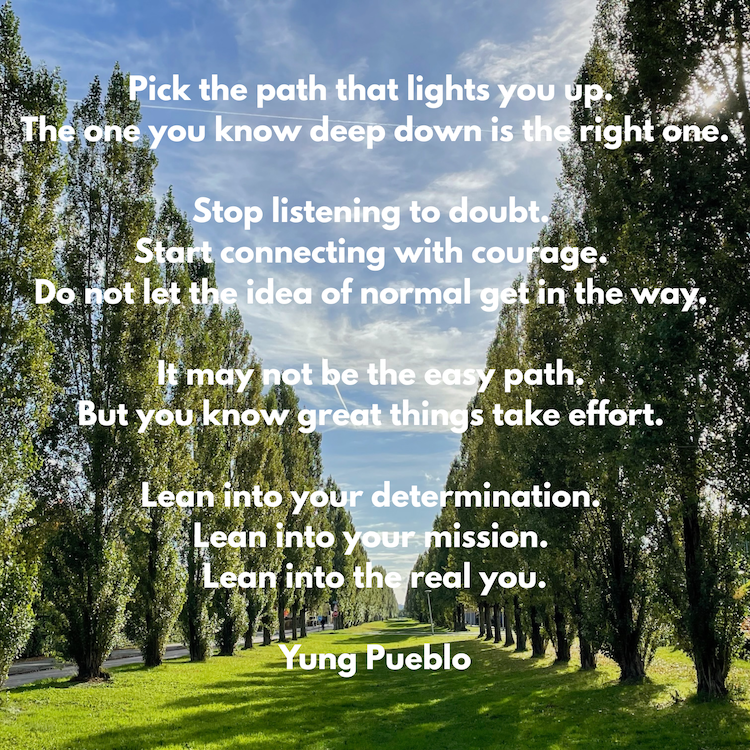
It has a lot to do with personal values and priorities: what’s important to me? What do I need in my life? It always comes down to these questions. And we need to liberate us from other people’s expectations in this regard. I’m the one who has to live with my choice – not someone else.

Just like healing, our life journey is never unfolding in a straight line. There are lots of turns or doubling back, and that is perfectly ok. My priorities change as well over time because I am not the same person I was years ago.

Being torn between two sides facing contradictory feelings after making a choice is very normal. Again, nothing is black or white.

But no matter what we decide – even if a decision turns out not to be the optimal one – we always gain insights. We grow and develop new interests and suddenly new opportunities come our way. It’s interesting to see where life takes us when we are open. We only realize it in hindsight.

A very personal example for me is an unhappy relationship I had in my twenties. A positive event during that time however, was a holiday we spent in Ireland.
I fell in love with this country immediately. Some time later it led me to do a four months’ stage in Dublin, which in turn sparked my wish to come back to live and work in Ireland, something I eventually managed to do.  

That was a clear turning point in my life, starting to work for an international company and then, many years later moving to the Netherlands. 

I would not be where I am today had it not been for that holiday in Ireland decades ago. Many wonderful friends I found that way – some at work, some by chance encounters – I would have never met. Finding a place I call home, gaining insights about myself – sometimes through tough experiences – I am grateful for what I encountered. 

So I clearly cannot say that if I could go back in time I’d make a different choice, because then I’d be a different person with a different life. 

There is no alternative universe to explore – this life is all we have got.

Let’s make the best out of it.

Inviting unpredictability

Have a little faith. There is no black and white situation. Things always change. There is no inevitability in how an event unfolds – even if I think (or wish) there must be.

How often have I experienced that things turned out much better than expected, but before they did I was fretting about them a lot and at length. 

Of course, it is always good to be prepared and to think things through, considering options and alternatives. Nothing wrong with doing my due diligence. But often, even that turned out to be not necessary at all.

So I am trying to have more patience and trust, ultimately having confidence that things can sometimes turn out well. Adjusting my expectations and not always assuming a negative outcome by default has become an important practice for me. Sometimes it works, sometimes it doesn’t.

There is also a flip side of course. Life is unpredictable. 

We don’t have a lot under control, but we are deluding ourselves that we do. I am very familiar with this behaviour, because I am a planner. Fear of bad events (real or imagined) is driving my need for control. 

Well, life doesn’t work like that. I am so used to attempting to eliminate bad surprises and trying to get on top of all important tasks in my life – but I know my wish is a mere illusion. 

It’s much more liberating to let go of this idea – an idea essentially rooted in perfectionism. Herein lies the real inevitability: that I am unable to control the outcome of life events.


Become comfortable with not knowing.

Eckhart Tolle

Allowing myself to experience conflicting emotions is part of the package. Questioning from time to time if I am on the right path is fully ok – I just need to hang in there. 

Letting go of things I cannot control, again and again, is important, but it’s also a real struggle. 

That’s what I learnt during the past months. Unfortunately, my parents are not happy in the care home they are living in. Of course, it was a big change at a very late point in their lives and they are understandably upset. They are grieving what they lost, lacking the strength and willpower to adjust to their new situation. Their cognitive decline makes it harder.

The aggression and resistance my brother and I were confronted with really hurt though. It’s sad to see them making themselves so unhappy. It was the right decision to move them and we waited a long time before going through with it. It’s a relief to know that they are not alone anymore and have all the help and support they need. 

We had the best intentions but of course no control over the outcome. And that’s exactly what can happen: you do something for all the right reasons, but someone else is unhappy as a result. 

I had hoped for them to make the best out of this situation and focus on the benefits it clearly has for them, but they don’t want to see it.


The moment you accept what troubles you’ve been given, the door will open.

Rumi

To acknowledge all this, my role in it and how it made me feel, was difficult. I struggled a lot with these conflicting emotions, feeling lost, angry and sad. 

In the weeks that followed I took the time to process it all, focused on protecting myself and on letting go, bit by bit. With time, I felt lighter, easing back into balance.

Where people’s emotions are involved, things get messy. Personal sensitivities have a large influence on their decisions and override the facts of reality quite often. It’s never to be underestimated. It can be a source of hope but can also turn out to be a recipe for disaster. We just never know in advance – and that’s life.

Nevertheless, this is the tiny space where hope is living. Between the black and the white.

There is always potential in every situation, even if I cannot see it in the very moment I am in it. It can turn out either way and there is not a lot we can do about it besides inviting unpredictability into our lives, fully knowing that it’s not going to be easy. 

Ultimately, have trust in what will unfold. It’s not in our hands (not always or not fully anyway most of the time), but that does not have to be a bad thing.

Have trust. In yourself and in life.


Don’t be pushed around by the fears in your mind. Be led by the dreams in your heart.

Roy T. Bennett

Holding space for life’s contradictions

Have you lately been thinking that our world is not a good place right now, that there is more bad than good news and things are getting worse each day? 

The focus on social media is clearly and increasingly on the negative, outliers are pictured as standard. Hence our perception that the world is a bad place, inducing fear and anxiety. We think there is rarely positive news, but in fact there is – we just need to actively start looking for it.

A good place to go to is Fix the news. Here you find what is actually going right in the world: stories of real progress that we rarely hear about because mainstream media are just not interested in them.

Some examples:

The list goes on – from improving access to electricity and water in third world countries, to decreasing litter in the oceans, boosting renewables, cutting pollution in cities or setting up new nature reserves. Behind all of this are always people who have not given up yet.

…progress happens not through some invisible hand of history, but through the visible hands of people who refuse to give up on it.

Angus Hervey

At all times, on this planet, there has been collapse on the one hand and progress on the other. Night and day, yin and yang. They co-exist and are interdependent. Like the Buddhists say: without the mud there is no lotus.

But because the side of collapse appears to be increasingly over-amplified through the media, do we overlook these opposites co-existing, and instead tend to believe the world is doomed. It’s easy to fall into this trap. 

Our forefathers’ legacy, to always be prepared for disaster, makes negative and scary things stick even more intensely in our brain. But we can take a different viewpoint.

The world is always horrible and beautiful at the same time, it always has been. But how we look at this paradox is up to us. We decide what we focus on, and that impacts how we live, work, communicate or raise our children.

Everything has different and sometimes conflicting aspects – it depends on the viewpoint we take. 

Life’s complexity and ambiguity are of course difficult to take in. Holding space for two conflicting positions asks a lot of endurance and self-reflection.

Deep inside we know that, but black and white scenarios are much easier to grasp. That’s why we are striving for simplification, but life is far more complex.  


We live in hope—that life will get better, and more importantly that it will go on, and that love will survive even though we will not.

John Green

How does it sound to choose the bright side more often for a change, by giving preference to hope over anxiety?

Even if I am struggling in my life, I can nevertheless enjoy happy moments. It never has to be either one or the other – I can hold and unite opposites within me.

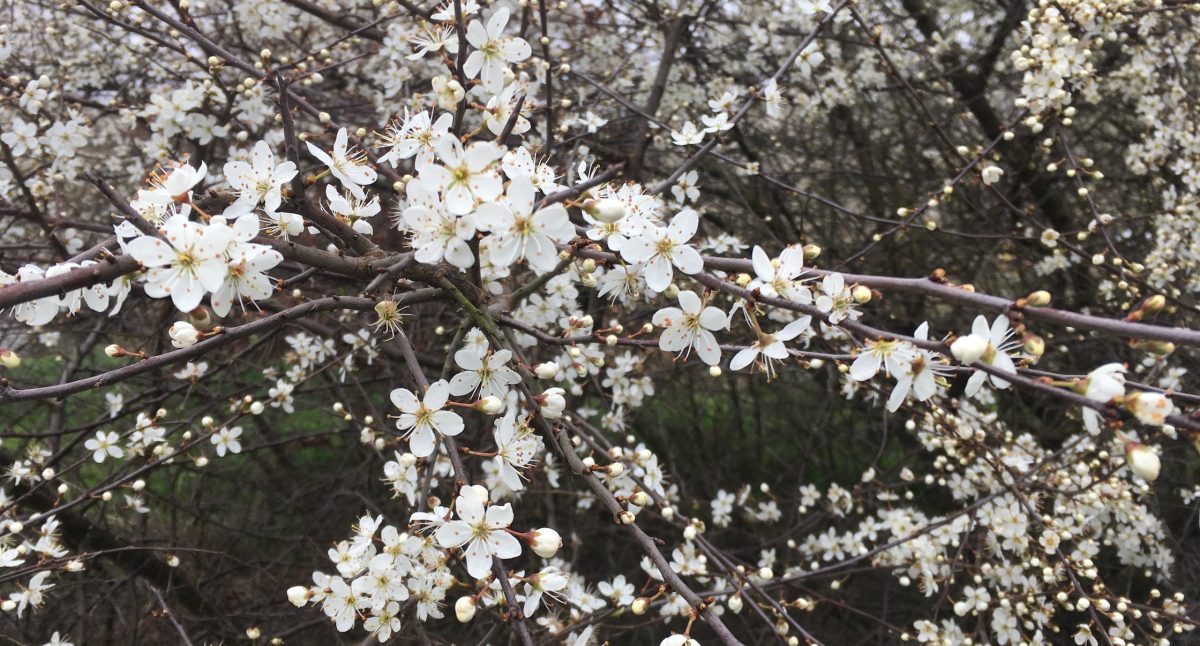
When I am not feeling well, I can still enjoy the sight of a blooming tree at the roadside.

I can feel desperate about climate change progressing, but still be happy about the achievements of The Ocean Cleanup.

Which side do we want to be on? Which story do we choose to be part of? Angus Hervey asks these questions in his inspiring TED talk.

Do we want to give in to despair or do we choose to be hopeful?

This choice people always had to make, in all circumstances at all times, and it’s never an easy one. 

How does it influence our thoughts and actions? How does it make us feel? Which choice do you think better equips us to deal with our daily struggles?

We set things in motion through our choices. What do we share with others, what deserves our time and energy, what do we believe in?

We change our lives by deciding which story we give preference to.

Ultimately, we change the world that way. Everything we do has repercussions, influences others. And it is sometimes so easy to inspire another human being, through the stories we share with them.

Holding space for life’s inevitable contradictions requires acceptance of life, the willingness to differentiate and living with nuances. 

Whenever I worry about the future, I remind myself that somewhere on this world – unknown to me – something always goes right.